Types Of Air Compressors
- Share
- Issue Time
- Jun 29,2026
Summary
As a qualified procurement manager, you must have a comprehensive understanding of air compressor classifications. This article classifies and summarizes air compressors from multiple perspectives, including application, operating principles, capacity, speed, power, control methods, cooling methods, lubrication methods, and mobility. After reading this article, you will have a very comprehensive understanding of air compressor classifications.
Foreword
Air compressors have become the second-largest source of industrial power, second only to electricity. Ninety percent of manufacturing production lines worldwide rely on industrial air compressors to carry out automated production.
Whether you work in automotive manufacturing, food processing, medical equipment, precision electronics, mining and infrastructure, or the aerospace and defense industries, air compressors are continuously gaining traction, with the global market maintaining an annual growth rate of over 12%.
As a qualified procurement manager, you must have a comprehensive understanding of air compressor classifications. This article classifies and summarizes air compressors from multiple perspectives, including application, operating principles, capacity, speed, power, control methods, cooling methods, lubrication methods, and mobility. After reading this article, you will have a very comprehensive understanding of air compressor classifications.
What is An Air Compressor?
An air compressor is a machine that draws in ambient air, increases its pressure through mechanical work, and then discharges it for storage or delivery to you—in simple terms, it is a device that “compresses” atmospheric-pressure air into high-pressure air so you can use it to power pneumatic tools, inflate objects, or supply industrial air.
Air Compressor Working Principle
Three-stage compression process:
Air compressors rely on electric motors to drive the compression mechanism and perform work. The entire compression cycle is divided into three stages, allowing you to clearly understand the changes in energy:
1. Intake stage: Air at atmospheric pressure flows freely into the compressor chamber.
2. Compression stage: By reducing the volume or through the high-speed rotation of the impeller, the frequency of collisions between air molecules increases, causing the air pressure to rise continuously.
3. Exhaust stage: The pressurized air is delivered to the air receiver tank for pressure stabilization and storage.
Main Classification Criteria for Air Compressors
Classified By Working Principle:
1. Positive displacement air compressor: By reducing the cavity space and squeezing air for pressurization
Including: Reciprocating Air Compressors, rotary screw air compressor, Scroll Air Compressors, slide type;
2. Dynamic Compressor: driven by high-speed rotation of the impeller to increase air pressure
Main: centrifugal air compressors
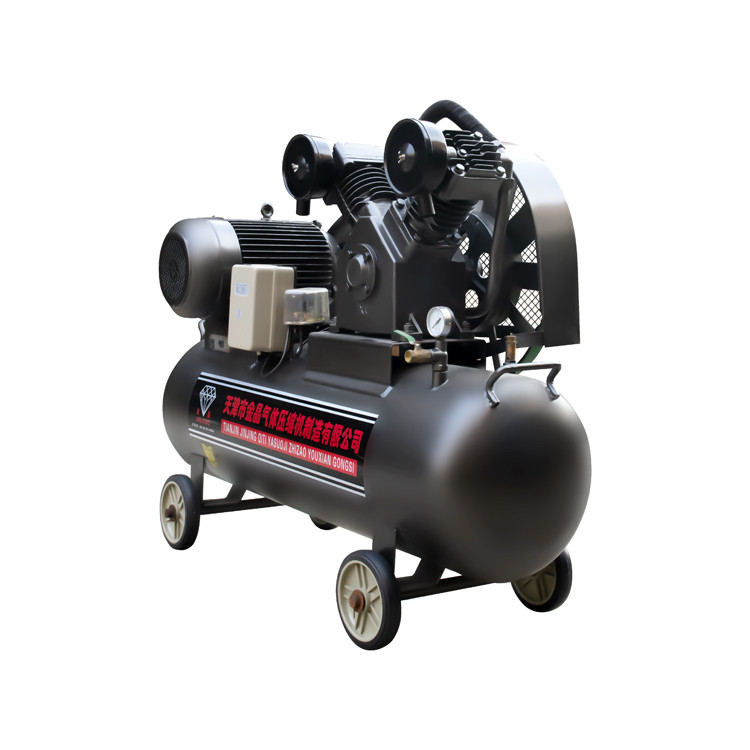
Reciprocating Air Compressors
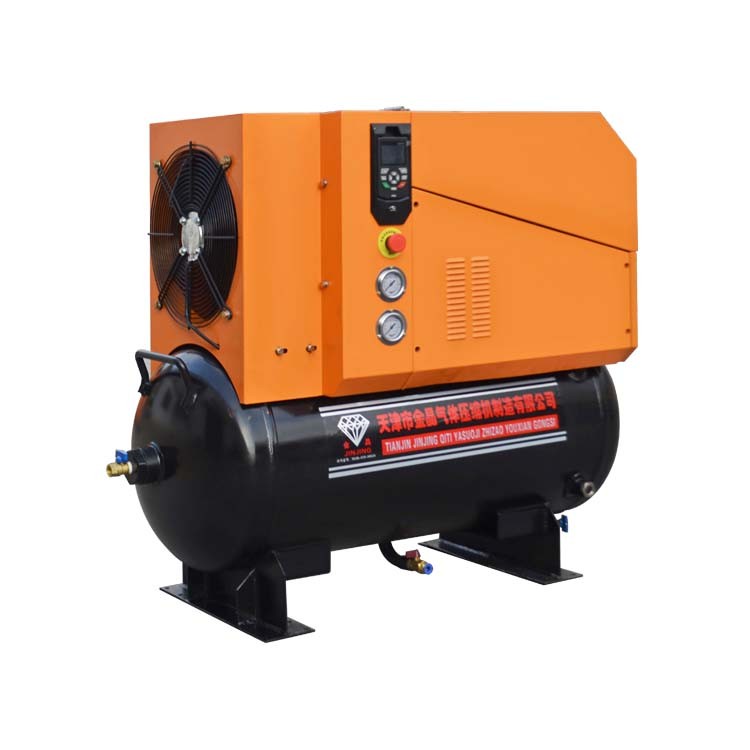
Scroll Air Compressors
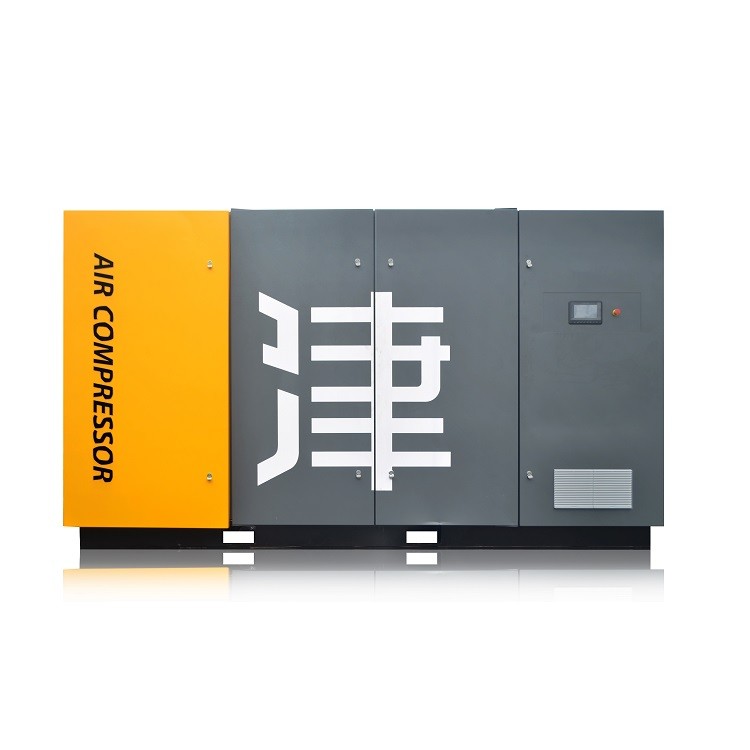
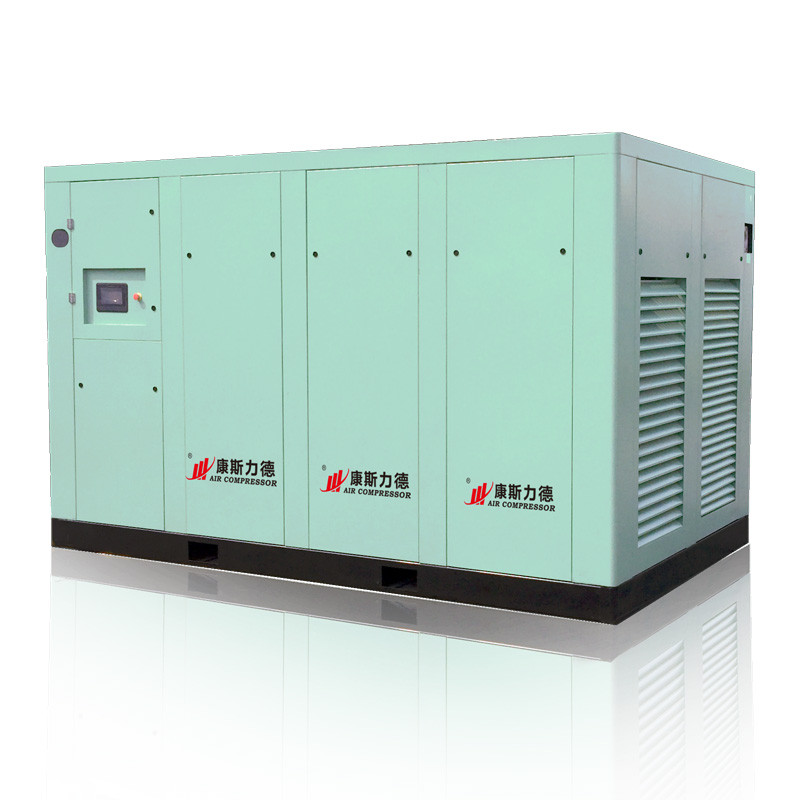
Rotary Screw Air Compressor
Centrifugal Air ompressors
Classification by Stage Classification:
Single Stage Compression:
Principle: Air reaches its final pressure after only one compression in the compressor.
Characteristics: Simple structure, low cost, but efficiency will decrease under high pressure. Commonly used in pressure ranges of 70-100 PSI (approximately 0.5-0.7 MPa).
Applicable: Small scale, intermittent usage scenarios, such as small auto repair shops and family workshops.
Two Stage/Multi Stage compression:
Principle: Air is compressed sequentially through two or more cylinders of decreasing size, and cooled between stages through an intercooler.
Features: Higher efficiency, lower exhaust temperature, able to achieve higher pressure (up to 175-250 PSI, approximately 1.2-1.7 MPa), and more energy-efficient.
Applicable to large factories and applications that require continuous heavy loads, such as sandblasting and heavy-duty pneumatic tools.
Classification by Drive Method:
This dimension distinguishes the power transmission method and is directly related to equipment efficiency and maintenance costs, making it an important consideration in procurement.
Direct Drive:
Principle: The motor spindle is directly connected to the compressor spindle without any intermediate transmission components.
Features: Compact structure, high efficiency (minimal energy loss), low maintenance.
Applicable: In situations where installation space and efficiency are required.
Belt Drive:
Principle: The motor transmits power to the compressor host through a belt and pulley.
Features: Low cost, adjustable speed by replacing the pulley, smoother operation (the belt can absorb some vibration), but regular inspection and replacement of the belt are required.
Applicable: to small and medium-sized equipment, cost sensitive or speed regulating scenarios.
Classification by Operating Pressure:
Low-pressure air compressors (0.3~0.7MPa), General pneumatic tools for daily use;
Medium-pressure air compressors (0.7~1.6MPa), Pipeline pressure testing, bottle blowing, leak detection use;
High-pressure air compressors Above 1.6MPa, for drilling, gas cylinder filling, and special working conditions;
By Lubrication Method
• Oil-injected air compressors: Highly versatile and cost-effective, suitable for general-purpose applications such as machining, sheet metal work, and auto repair
• Oil Lubricated Air Compressors:Oil-lubricated air compressors use oil to reduce friction, cool internal parts, and extend equipment life. The oil also traps contaminants, ensuring cleaner air for sensitive applications. Regular maintenance is needed to keep oil clean and at proper levels, as dirt buildup can lower efficiency and shorten lifespan.
• Oil-free air compressors: Compressed air oil content ≤ 0.01 mg/m³; provides a clean air supply and is the top choice for the food, pharmaceutical, and precision electronics industries
• Oil-Less Air Compressors: The oil-less air compressor is designed with a special coating that does not require lubricating oil. These compressors rely on dry compression technology and eliminate the need for oil by using natural self-lubricating materials such as PTFE.
In terms of performance, oil-less air compressors can be suitable for various high-quality compressed air application scenarios.
By Motor Power (kW)
• Small air compressors: 2.2kW, 3kW, 4kW, 5.5kW, 7.5kW, suitable for individual operations and intermittent gas use in small workstations
• Medium-sized air compressors: 11kW、15kW、18.5kW、22kW、30kW, Suitable for small workshops and multiple workstations with continuous gas usage
• Large air compressors: Above 37kW, 45kW, 55kW, 75kW, 90kW, 110kW, suitable for centralized gas supply in large factories and use in the entire production line
By Cooling Method
Air-cooled air compressors: Feature built-in fans for cooling and are easy to install; commonly used for small and medium-sized models.
Water-cooled air compressors: Offer more effective cooling through water circulation and are suitable for high-power, long-term continuous operation.
Divided By Displacement (m ³/min)
• Small flow rate: 0.3-1.0m ³/min
• Medium flow rate: 1.0-10m ³/min
• High flow rate: 10m ³/min or above
By Control Method
Power-frequency air compressors: Operate at a fixed speed and are suitable for applications with stable air demand.
Permanent magnet variable-speed drive (VSD) air compressors: Intelligently adjust speed and air output, saving more energy during periods of high air demand fluctuations.
By Mode of Transportation
• Stationary air compressors: Permanently installed in factory buildings
• Portable/Mobile air compressors: Used for site-to-site operations in infrastructure projects and outdoor mining operations; account for 42% of the infrastructure sector
• Soundproof enclosed air compressors: Equipped with soundproof enclosures to keep noise levels below 65 dB
By Applications
• Medical air compressors: Compliant with the GB 18463 standard for medical gases
• Mining air compressors: Certified as explosion-proof; designed specifically for high-risk underground environments
20 Common Applications of Air Compressors
As the core power source of pneumatic systems, air compressors offer a wide range of essential functions that cover all aspects of your production and operations:
1. Powering various pneumatic equipment, such as pneumatic wrenches, jackhammers, pneumatic drills, air cylinders, and robotic arms
2. High-pressure blow-off for dust removal, clearing metal shavings, dust, oil stains, and debris from workpieces and equipment
3. Spray painting operations, using atomized paint to coat sheet metal, furniture, and hardware surfaces
4. Pneumatic conveying of plastic pellets, powders, grains, and bulk chemical materials
5. Pressure testing of pipes, tanks, and valves, and conducting airtightness and leak detection tests
6. Automatic clamping and positioning using pneumatic fixtures to enable automated motion control on production lines
7. Plastic bottle blowing, thermoforming, and blow molding—shaping and processing using high-pressure air
8. Blowing dry cutting fluid and water residue from workpieces, and cooling and drying machined parts
9. Aeration and oxygen supply for wastewater treatment; oxygenation of fish ponds in aquaculture
10. Inflating and topping up tires on automobiles, forklifts, and construction vehicles
11. Powering field operations for mining jackhammers, rock drills, and pneumatic crushing equipment
12. Pneumatic packaging and sealing machines to complete automated product packaging processes
13. Instrument air for power plants and chemical plants, serving as the air source for remote control of automated valves
14. Filling of high-pressure gas cylinders; clean, high-pressure air supply for diving and firefighting breathing apparatus
15. Auxiliary blowing for laser/plasma cutting to remove molten slag and improve cutting precision
16.General Manufacturing Industry: Air compressors power 80% of automated production lines. If you switch to permanent magnet variable-frequency screw air compressors, energy consumption can be reduced by 23%, saving a single plant more than 800,000 yuan in electricity costs annually.
17.Healthcare Industry: Dental treatment units are equipped with compact, quiet air compressors that strictly control pressure fluctuations within ±0.02 MPa, ensuring a clean and stable air supply.
18.Defense and aerospace sector: A three-stage compressed-air missile launch system that provides high-speed propulsion in 0.02 seconds; ground testing of launch vehicles uses ultra-high-pressure air compressors operating at 300 MPa, with cylinders capable of withstanding pressures equivalent to depths of 3,000 meters in the deep sea.
19.New Energy Hydrogen Industry: Air compressors used in water electrolysis for hydrogen production must meet an airtightness requirement of 99.999%. You must strictly control sealing performance to eliminate the risk of hydrogen leaks.
How to Choose the Right Type for Your Application?
To help you choose the right type of air compressor for your project, we’ve compiled the following chart comparing the pros and cons of various products.
Comparison of Major Air Compressor Types: Screw vs. Piston vs. Centrifugal
| Dimensions of Comparison | Screw-type | Piston-type | Centrifugal |
| How It Works | Positive-displacement: Relying on the rotation of two meshing helical rotors (male and female rotors), it gradually compresses the trapped air. | Positive-displacement: Pressurizes air by directly reducing its volume through the reciprocating motion of a piston inside a cylinder.
| Dynamic type: A high-speed rotating impeller transfers kinetic energy to the air, which is then converted into pressure energy by a diffuser. |
| Key Features | Continuous, pulse-free airflow output; smooth operation with minimal vibration. Suitable for 100% continuous duty. | Intermittent, pulsed airflow. There are duty cycle limitations (typically 60–70%), and the unit must be shut down for cooling. | A continuous, pulse-free, and 100% oil-free air flow makes it the ideal choice for high-flow air supply.
|
| Efficiency and Energy Consumption | High efficiency, especially for models equipped with variable-speed drives (VSDs), which deliver significant energy savings under partial load conditions. Efficiency at full load can reach approximately 96%. | Its efficiency is relatively low, at about 65–70%. Energy consumption may account for 70–75% of its life-cycle costs.
| It is extremely efficient under high-flow conditions, but its efficiency drops significantly at partial load or low flow rates.
|
Pressure and Flow | The pressure range is low to medium, and the flow rate range is medium to high. The typical maximum pressure is approximately 150 psi (10.3 bar). | The pressure range is extremely wide, extending from low pressure to very high pressure (up to 200 psi/13.8 bar or higher). The flow rate ranges from low to medium. | Suitable for applications requiring extremely high flow rates, but with limited single-stage pressure lift; not suitable for ultra-high-pressure applications.
|
Maintenance and Costs
| The initial investment is high, but maintenance requirements are low because there are few moving parts and minimal wear and tear. | Although the initial cost is low, the presence of many moving parts (piston rings, valves, etc.) may result in more frequent maintenance and higher long-term costs. | They have the highest initial costs, are structurally complex, and require professional maintenance and monitoring.
|
Noise Level | It runs relatively quietly, with low noise levels. | It is quite noisy when running. | High-frequency noise is generated during high-speed operation, but the units are typically equipped with soundproof enclosures. |
Typical Applications | The core of continuous industrial production: automotive final assembly, painting, electronics manufacturing, food and beverage production lines, and more. | Intermittent or low-flow applications: small auto repair shops, DIY projects, intermittent use of pneumatic tools, and home workshops.
| Large-scale, continuous, oil-free applications: centralized compressed air supply for large-scale manufacturing, air separation equipment, petrochemical plants, and instrument air for power plants, etc. |
This table provides your readers with a clear, visual overview of how the three main technologies compare, helping them make more informed initial selection decisions. For more specialized consultation, please contact us immediately.
Ending Words
In summary, air compressors can be categorized into various product types based on different criteria, and understanding these classifications is crucial for the proper use and procurement of air compressors. If you are looking for a reliable direct manufacturer of air compressors and need one-stop services—including design of operating conditions, model selection and quotes, energy-saving retrofits, and on-site maintenance and repair—please feel free to contact us:
Tianjin Jinjing Gas Compressor Manufacturing Co., Ltd.
Main Products: Permanent magnet variable-frequency screw air compressors, oil-free air compressors, piston air compressors, portable air compressors, high-pressure specialty air compressors, and complete sets of after-treatment equipment including dryers and filters
Official Website: www.jjaircompressor.com
Address: No. 2 Anze Road, Zhangjiawo Town, Xiqing District, Tianjin
Business Hotline: 8615320082297